What is Uyghur calligraphy?
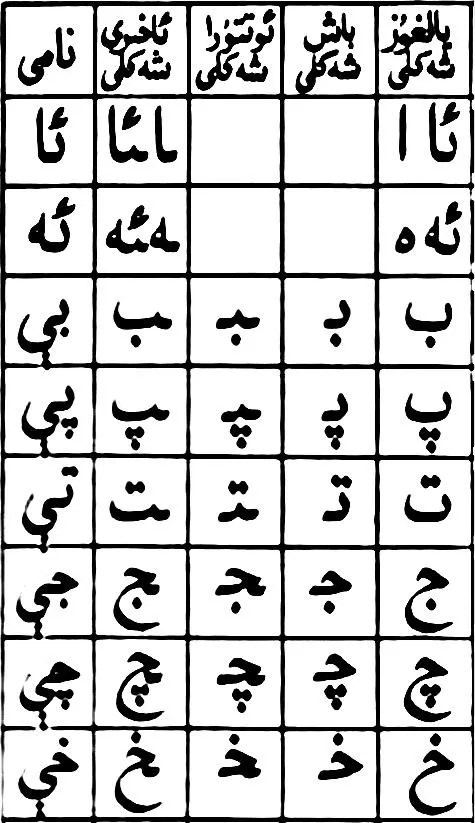
The Uyghur language is a Turkic language written in a unique Perso-Arabic script, which was adopted when Islam arrived in the region in the 10th century. Modern Uyghur script descends from Chaghatay, a Turkic literary language that was common in Central Asia from the 13th - 20th centuries.
Uyghur calligraphy has 12 forms: Tüz, Ruq'i (or Kesme), Te'iliq, Esliye, Sulus, Nesxi, Kufi, Shetrenji Kufi, Reyhani, Ijazet, Diwani, and Jelli Diwani forms. Other forms also include Töw'em, Teswiriy, Kurgül, and Jelli which use words to form shapes and pictures.
Uyghur calligraphy has been a well-respected and widely-visible practice in Uyghur society for centuries; for a long time it was one of the main conduits through which knowledge had been passed down throughout eras, especially from Chaghatay.
Ablikim Emet
Read more about my mentor on his website. Ablikim Emet is a professional calligrapher, photographer, and videographer who was widely published in East Turkistan. His first calligraphy publication was in 1984, and since then he's had his calligraphy printed in numerous journals, books, magazines, signage, and so on. He has mentored many students who have also gone on to become professional calligraphers. He was forced to settle in the US due to the atrocities happening in our homeland, so he is slowly rebuilding his career in the arts.
Events and media appearances
I completed an apprenticeship in Uyghur calligraphy with Ablikim Emet under the Mass Cultural Council's Traditional Arts Apprenticeship program from 2022-2024.